A November Cheese Table, Provençal Style: Six Bottles for Cheddar, Stilton and the Rest
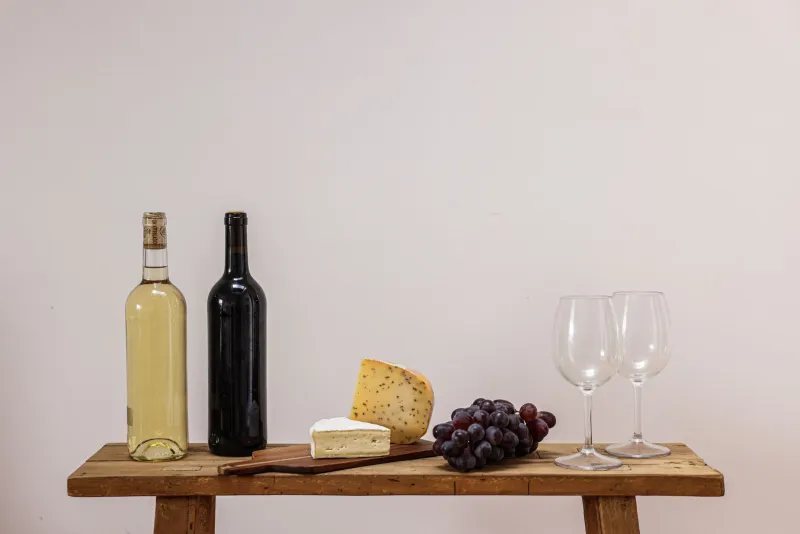
By early November, the British cheese board has changed character. It is no longer a picnic afterthought or a lazy lunch outside; it is a proper evening arrangement, brought out when the curtains are closed and the heating has clicked on. Mature Cheddar, a wedge of Stilton, a soft goat's cheese, perhaps a fruity Wensleydale: these are strong, salty, varied flavours, and they deserve more than one bottle of very cold rosé.
Provence can rise to the occasion. The region is not only a summer pour, and its whites, pinks and lighter reds have the acidity, texture and herbal scent to work with a British cheese table. The trick is to stop thinking of Provençal wine as a single style and start giving each cheese a job.
Start with salt, acidity and garrigue
Three principles do most of the work. First, salt. Cheese is salty, and salt makes wine taste softer and rounder. A wine with no freshness can collapse under a mature Cheddar or a Stilton. Second, acidity. Fat in cheese coats the palate, and acidity in wine cuts through it, resetting the mouth for the next bite. That is why a crisp white or a pale rosé can feel so lift-giving beside a buttery cheese.
Third, garrigue. The thyme, rosemary, fennel and lavender scents that mark so many Provençal wines are not a gimmick; they are a bridge to the savoury, dusty, herbal edges of a cheese board. Oatcakes, celery, walnuts and a not-too-sweet chutney all pick up those notes. Tannin needs care, though. Big, drying reds and salty blue cheese can fight; moderate, sun-ripe reds are more forgiving.
The board, briefly
Keep it simple and very British: a mature Cheddar with some bite, a Stilton that crumbles rather than smears, a soft goat's cheese, and a fruity Wensleydale for contrast. Add oatcakes or sourdough, celery, a few walnuts, apple slices and a quince or pear chutney. Let the cheese come out of the fridge half an hour before serving. Cold dulls everything, including the wine.
Six bottles, six jobs
1. Cassis Blanc
Cassis white is typically a blend of Clairette, Marsanne and Ugni Blanc, and it has a lovely saline, lemon-oil texture. It is the bottle for the soft goat's cheese and the Wensleydale: fresh enough to cut the dairy richness, textured enough not to taste thin. Serve it lightly chilled, around 10 to 12C.
2. Cassis Rosé
Pale, crisp and redcurrant-fresh, Cassis rosé is a natural match for the milder end of the board. Think Wensleydale and a young, creamy Cheddar. It also makes a useful aperitif while the cheese comes up to room temperature. Around 10C is plenty; in a warm November kitchen, stand the bottle in a cool room rather than the fridge door.
3. Bandol Blanc
Bandol white brings more weight: Clairette, Rolle and Ugni Blanc, often with a waxy, fennel-tinged character. This is the white for a soft goat's cheese with a little age, and for mature Cheddar if you want a richer partner. Serve at 11 to 13C, not ice-cold, so the texture can show.
4. Bandol Rosé
Bandol rosé is a more serious pink, usually with Mourvèdre in the blend, and it has the strawberry fruit, herbal scent and acidity to handle mature Cheddar. It is also one of the few rosés that can stand beside Stilton without being overwhelmed, provided it is not served at chiller temperature. Aim for 11 to 12C.
5. Coteaux d'Aix Rosé
Coteaux d'Aix-en-Provence rosé tends to be rounder and more peachy than the Cassis style, with Grenache, Syrah and Cinsault doing the work. It is the easy-going bottle for Wensleydale, mild Cheddar and a soft goat's cheese, and it keeps the table feeling generous rather than precious. Serve at 10 to 12C.
6. Coteaux d'Aix Rouge
A Coteaux d'Aix red, based on Grenache and Syrah, gives soft dark fruit, a dusting of garrigue and moderate tannin. It is not a classic Stilton wine in the port sense, but it works: the fruit rounds off the blue cheese's salt, and the herbal edge picks up the rind and oatcakes. It is also good with mature Cheddar. Serve it cool for a red, around 15 to 16C, especially in a heated November room.
A word on temperature and timing
Dark evenings tempt us to over-chill whites and rosés and to serve reds too warm. Neither helps. Whites and rosés are best at 10 to 12C; Bandol blanc can go a degree or two higher. Reds are best at 15 to 16C, which in a centrally heated British house often means giving the bottle ten minutes in a cooler spot. Open reds half an hour before serving, and pour modestly so the wine stays at temperature in the glass.
The takeaway
A British cheese board does not need a dozen bottles. It needs a few well-chosen ones with enough acidity to refresh, enough texture to match the dairy, and enough garrigue to echo the savoury edges of the table. Cassis gives freshness and salinity, Bandol gives depth and structure, and the Coteaux d'Aix gives generosity. Put a chill on the rosé, but not a freeze; let the reds breathe; and let the cheese come up to room temperature. That is a very good November arrangement.